Description of the True Identity of Jesus Christ and God Explained

My House will be called a house of prayer,' but you are making it 'a den of robbers.
Understanding the Threefold Nature of Jesus: Flesh, Spirit, and the Living God's Spirit
Title: The True Identity of Jesus Christ:
Main Reference: John 10:30-38
Objective: To comprehend the unity of Jesus and the Father.
Some individuals assert the doctrine of one God in three persons; however, this teaching lacks a scriptural basis. This concept originated with the Pharisees and the teachers of the law. In this lesson, we will examine and clarify the true nature of God as revealed through Jesus Christ. Let us focus on the Word of the Lord. Our primary biblical reference is John 10:30: "I and the Father are one." Once again, His Jewish opponents prepared to stone Him, but Jesus responded, "I have shown you many good works from the Father. For which of these do you stone me?" vs:33, They answered, "We are not stoning you for any good work, but for blasphemy, because you, a mere man, claim to be God." Jesus replied, "Is it not written in your law, 'I have said you are "gods"'? If those to whom the word of God came were called 'gods'—and Scripture cannot be broken— vs:36-38, then what about the one whom the Father consecrated and sent into the world? Why do you accuse me of blasphemy because I said, 'I am God's Son'? Do not believe me unless I do the works of my Father; but if I do them, even though you do not believe me, believe the works, so that you may know and understand that the Father is in me and I am in the Father."
Meaning and Definition
Jesus affirms His essential unity with God the Father by declaring, "I and the Father are one," which led the religious leaders to accuse Him of blasphemy for equating Himself with God.
When examining these passages, it is evident that there is compelling evidence to believe Jesus Christ originated from God the Father. However, the Pharisees, who were acting under the influence of their father the devil, failed to recognize the glory of the Lord revealed in Jesus Christ.
The Claim:
Jesus Christ asserts that He and the Father are One, employing a Greek term that denotes a shared divine essence, nature, and power, rather than merely a shared purpose.
The Accusation:
The Jewish leaders attempt to stone Him, accusing Him of blasphemy for claiming to be God despite being a mere man.
The Defense:
Jesus cites "I said you are gods" to argue from the lesser to the greater: if Scripture applies the term "gods" to human judges or leaders who received God's word, then His unique status as the sanctified Son sent by the Father is valid and blameless.
The Appeal to Works:
Jesus challenges His critics to judge Him by His miraculous deeds; even if they do not accept His words, they should believe the evidence of the Father's work manifested through Him, thereby demonstrating that the Father is in Him and He is in the Father.
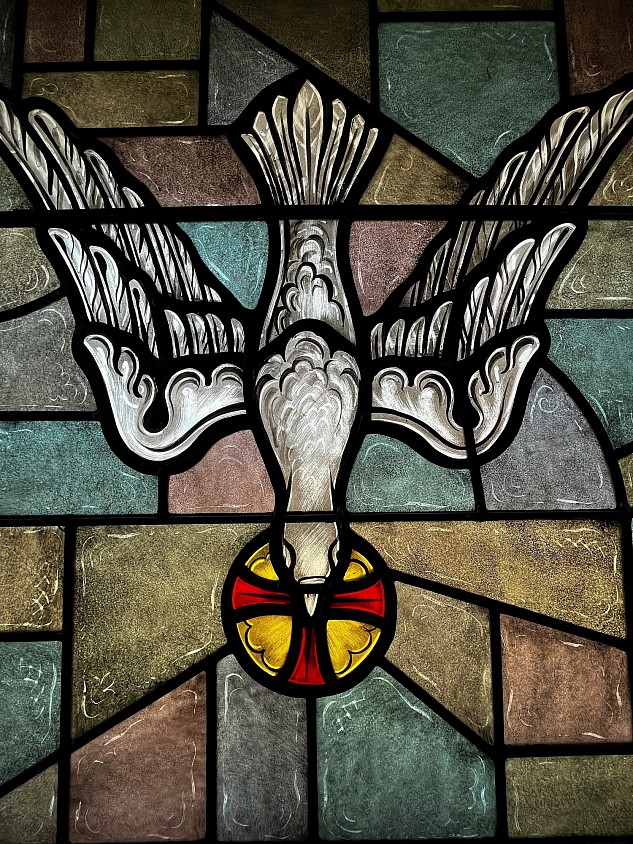
The Spirit of Jesus

The Spirit of the Living God.
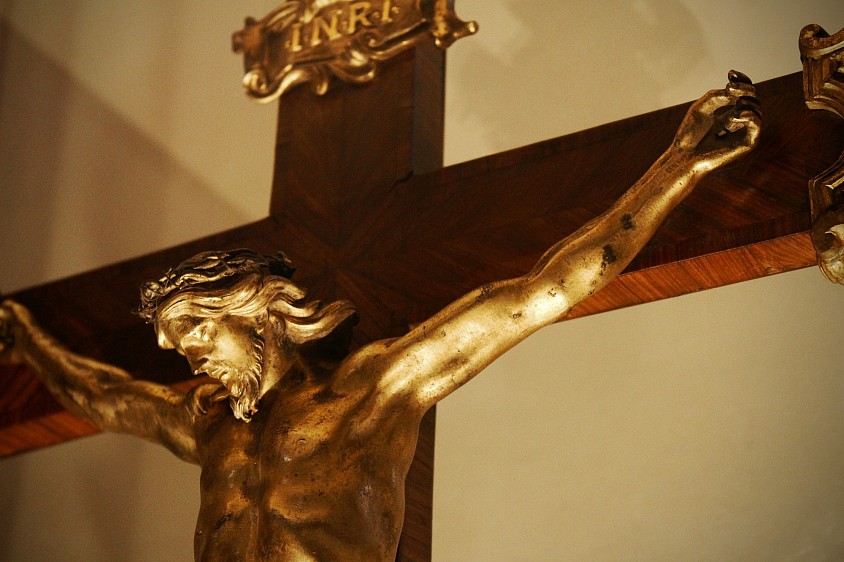
Jesus in His Body {flesh.}
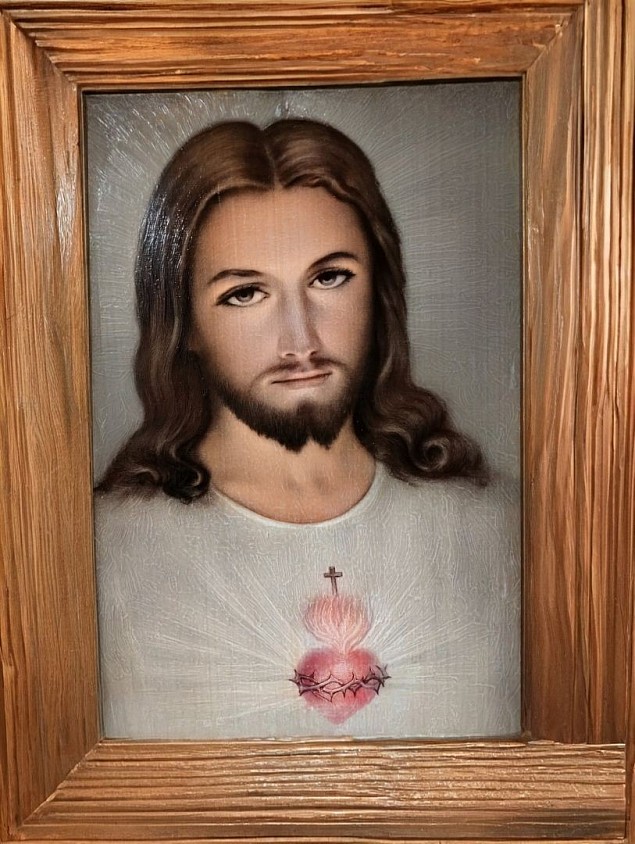
The Resurrcted Massiah. He has Raisin. He is Alive.
"This is My Beloved Son, in Whom I Am Well Pleased: Understanding the One Person in Three Spirits and the Correct Attribute"
Revelation 1:13-18: "And among the lampstands stood one like a son of man, clothed in a robe extending to his feet, with a golden sash across his chest. vs:14, His hair was white as wool, pure as snow, and his eyes burned like blazing fire. His feet resembled polished bronze refined in a furnace, and his voice was like the sound of rushing waters. In his right hand, he held seven stars, and from his mouth came a sharp, double-edged sword. His face radiated with the brilliance of the sun.
vs:17, Upon seeing him, I fell at his feet as though dead. Then he placed his right hand on me and said: Do not be afraid. I am the First and the Last. I am the Living One; I was dead, and now behold, I am alive forevermore! And I hold the keys of death and Hades.
Definition and Significance: The spiritual lamp symbolizes the spirit within an individual, while the lampstand represents the combined presence of both soul and spirit.
The Robe and the Golden Sash:
These elements signify Jesus’ victory over all opposition—whether human or satanic—and dominion over all living beings.
Hair and Eyes Like Blazing Fire:
White hair symbolizes glory, and eyes like blazing fire denote a stern, authoritative leadership that communicates powerfully without words, either consuming or guiding.
Feet Like Bronze and Voice Like Rushing Waters:
The voice is beautiful, clear, and pleasing to all who hear it. Feet like bronze represent incorruptibility and steadfastness, never walking in wickedness and enduring eternally.
Double-Edged Sword and Radiant Face:
His words are penetrating, reaching soul, body, and spirit; they can divide bones and marrow, judge and consume, bless, save lives, and transform all beings. The radiant face symbolizes splendor, beauty, majesty, power, and authority that will never fade.
Interpretation of the Trinity:
The Spirit declares, "I was dead, but now I am alive forevermore." This statement invites reflection on two key aspects: first, the body that was dead, and second, the living spirit without a body. Regarding the body, the fact that he was dead confirms his physical existence. This is evident, as all have witnessed and can testify to the person who was both alive and dead, having seen him crucified.
Regarding the spirit: Through faith, knowledge, understanding, and wisdom, we believe in God, though unseen. We recognize that the world was not created by chance; the heavens, earth, sea, and humanity did not come into existence by their own wisdom or power. Rather, all things came into being through a spiritual, incorporeal, non-physical entity who existed before all things and by whose wisdom everything was created—he spoke, and all came to be. Amen.
Thus, the Trinity can be understood as one person in three spirits, rather than three separate persons. We observe the body of the Messiah crucified, and we witness the glory of the living God shining around us and throughout the world daily. It is that simple: one person in three spirits—the Spirit of the living God, the Spirit of Jesus Christ who declares, "I was dead, now I am alive forevermore," and the flesh of Jesus Christ, who is both Lord and Messiah.
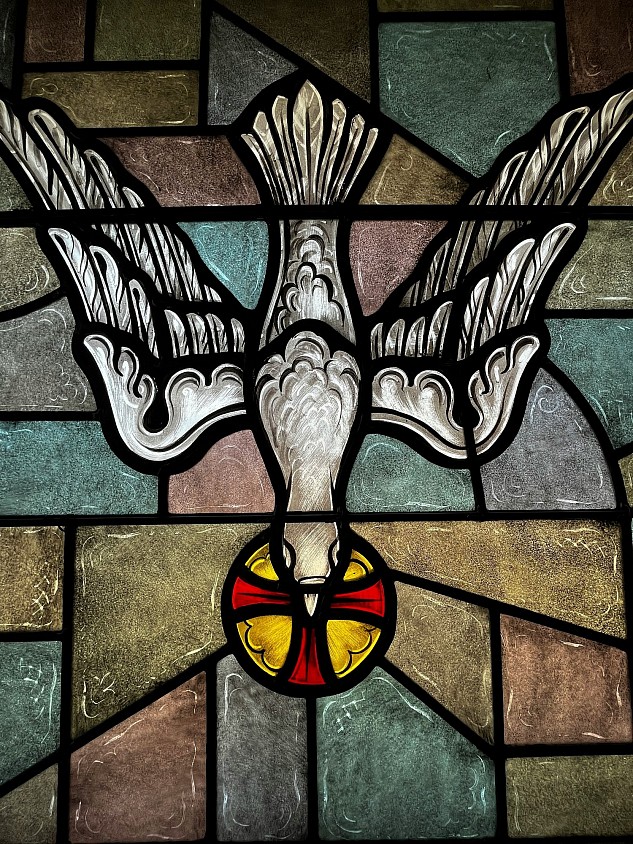
Symbolizing the Holy Spirit, with the Ability to flight the Air Space.
Understanding a Spiritual Being as an Incorporeal, Non-Physical Entity Independent of Flesh
Transcending the physical material realm, the essential definition of a spiritual being encompasses the following:
- Supernatural and Divine Entities:
These are immaterial beings without physical form, endowed with powers surpassing the natural world.
The Supreme Being: In monotheistic traditions, God is acknowledged as the Uncreated, omnipotent, and infinite spirit who brought the universe into existence. Isaiah 42:8 proclaims, "I am the Lord; that is my name! I will not yield my glory to another or my praise to idols."
Isaiah 43:11-13 states, "I, even I, am the Lord, and apart from me there is no savior. I have revealed and saved and proclaimed—I, and not some foreign god among you. You are my witness," declares the Lord, vs:13, "Yes, and from ancient days I am he. No one can deliver out of my hand. When I act, who can reverse it?"
The Heavenly Host and Other Entities: This category includes non-physical beings such as angels, archangels, and demons. - The Human Experience: Spiritual Beings in Physical Bodies
Essence over Matter: A prevalent philosophical and metaphysical perspective holds that humans are essentially immortal souls or consciousness temporarily inhabiting a physical form.
Personal Connection: Many individuals regard spirituality as a personal journey to uncover life's purpose and establish a connection with a higher power or the universe, independent of organized religion.
Diverse Perspectives: Opinions shared on platforms like Quora vary, with some defining spirituality as the existence of an eternal soul, while others interpret it as a profound commitment to human values, nature, and ethics without adherence to strict supernatural beliefs. - Theological and Biblical Definitions:
Indwelling of the Spirit: In Christian theology, a "spiritual person" or being is one transformed and enlivened by the Holy Spirit rather than by human nature alone.
Spiritual Maturity: This term describes an individual who lives in accordance with divine commandments and manifests spiritual fruits such as love, peace, and mercy. - Exodus 3:13-15 records Moses asking God, "Suppose I go to the Israelites and say to them, 'The God of your fathers has sent me to you,' and they ask me, 'What is his name?' Then what shall I tell them?" vs:14, God replied to Moses, "I AM WHO I AM. This is what you shall say to the Israelites: I AM has sent me to you." vs:15, God further instructed Moses, "Say to the Israelites, 'The LORD, the God of your fathers—the God of Abraham, the God of Isaac, and the God of Jacob—has sent me to you.'"
- This is my name forever; the name by which I am to be called from generation to generation.
- Key Theological Significance and Definition:
- God revealed His eternal, self-existent, and self-sufficient name, declaring "I AM WHO I AM" to Moses during the encounter at the burning bush.
- Self-Existence: The phrase "I AM WHO I AM" signifies that God is independent of all else for His existence, having neither beginning nor end.
- Immutability: God’s character, essence, and promises remain unchanging.
- Covenant Identity: God connects His divine identity directly to history by identifying Himself as "the God of Abraham, the God of Isaac, and the God of Jacob," affirming His faithfulness to His holy promises across generations.
- The Name LORD or God: The Hebrew letters YHWH, often rendered as LORD in all capital letters, originate from this revelation and serve as His personal, eternal name. Amen.
- Let us now pray: Dear living Father, Creator of all things and the One true God, we thank You profoundly for revealing Yourself by name and connecting Your Holy Spirit to our ancestors, granting us the assurance to believe, hope, and place our trust in the One true God. Though no physical form has been seen or can be described, we rely on Your promises. We have witnessed Your glory, power, mighty acts, and awe-inspiring deeds toward humanity. You stretched out Your arm and with Your strong hand delivered Your people from the land of slavery. We have also seen the signs and wonders, the plagues that only You performed. You fulfill all the good promises You made to them. Thank You, gracious Father, for our Lord and Savior Jesus Christ. Through Him, we recognize the Trinity and bear witness to Your love, power, and faithfulness. To Him be the glory forever and ever. We pray all this in His holy name alone. Amen.
TTT. Tabernacle Temple of the Testimony.
True Identity of Jesus Christ as Both Son of Man and Son of God: Exploring Why Jesus Called Himself Son of Man and Son of God
Upon the return of Jesus Christ and the restoration of all creation, the name TTT, the Tabernacle Temple of the Testimony, will be inscribed within God's temple. Revelation 15:5-6 states, "After this I looked, and I saw in heaven the temple—that is, the tabernacle of the covenant law—and it was open. vs:6,"
From the temple emerged seven angels bearing the seven plagues, clothed in pure, radiant linen with golden sashes across their chests. We will examine and discern the true identity of Jesus Christ; however, let us first consider why Jesus referred to Himself as both the Son of Man and the Son of God.
Meditation and Reflection:
1. Jesus Christ identified Himself as both the Son of God and the Son of Man to highlight His genuine humanity alongside His exalted divine authority as the prophetic figure foretold in the Old Testament. Emphasizing Humanity:
The title "Son of Man" denotes a mortal human being. Jesus employed this designation to affirm His authentic humanity—living, suffering, and dying in the flesh like His brethren. This humble title underscores how the Creator humbled Himself to dwell among ordinary, broken people.
Fulfilling Prophecy and Divine Authority:
2. In the books of Daniel and Revelation, both the prophet Daniel and the apostle John witnessed a figure described as the "Son of Man" coming on the clouds or seated among the lampstands. By applying this title to Himself, particularly during His trial before the high priest, Jesus asserted shared cosmic authority and divine presence with God. This claim led His accusers to charge Him with blasphemy and capital offense.
Avoiding Political and Satanic Traps:
Unlike the title "Messiah" or "King of the Jews," which carried rigid, militaristic expectations of overthrowing the Roman Empire, Jesus deliberately avoided such political implications. During the temptation following His baptism (Matthew 4:3-6), the tempter twice challenged Jesus by saying, "If you are the Son of God." Jesus refuted these temptations not with direct answers but by silencing Satan with prophetic truth and scriptural authority.
The Incarnation of the Word of Life:
1 John 1:1-4 declares, "That which was from the beginning, which we have heard, which we have seen with our eyes, which we have looked at and our hands have touched—this we proclaim concerning the Word of life. vs:2, The life appeared; we have seen it and testify to it, and we proclaim to you the eternal life, which was with the Father and has appeared to us.
vs:3, We proclaim to you what we have seen and heard, so that you also may have fellowship with us and with His Son, Jesus Christ.
vs:4, We write this to make our joy complete."
Meaning and Definition:
The incarnation refers to the eternal Son of God assuming human nature and flesh while remaining fully divine, commencing at His conception. In contrast, His birth is the temporal event of entering the world as a human infant in Bethlehem.
The Reality and True Nature of Jesus Christ:
Luke 1:38 recounts, "After the angel of the Lord finished delivering and explaining all the Lord’s proposals to Mary, she joyfully and willingly responded: 'I am the Lord's servant.' Mary answered, 'May your word to me be fulfilled.' Then the angel departed. Immediately, the process of the incarnation began within her womb."
Definition, Timing, and Nature:
The supernatural event wherein the first Person and second spiritual being of the Trinity, "God the Son," assumed a real, sinless human nature—"the Life Appeared" (1 John 1:2). The timing: this did not begin at His birth but at His conception in the womb of the virgin Mary through the Holy Spirit. The nature: Jesus Christ is hypostatically united—fully God and fully human in one indivisible person. He did not cease to be divine when He became human.

In the town of bethlehem a son was born
The True Nature of Jesus Christ: Son of God, God/Lord Himself, and the Incarnation Beginning at Conception
Being Born, Birth/Nativity:
Definition: The physical and temporal event marking the delivery and emergence of Jesus Christ into the world as a newborn, commonly referred to as the Nativity.
Timing: This event took place approximately nine months after the Incarnation at conception.
Significance: While the Incarnation establishes His nature as God-Man, His birth signifies the concrete milestone of being born of a woman, undergoing normal human development, and experiencing hunger, homelessness, and growth.
Humility and Inspiration: Despite being the wealthiest and most powerful being on earth, Jesus Christ never exploited His fame, power, or wealth against anyone. He never boasted or accepted praise for Himself but attributed all glory and honor to the Father. Instead, He assumed the humblest position as a servant, fulfilling all prophecy.
The True Identity of Jesus Christ: He is the Son of the living God, Lord, and God Himself. Amen